Showing posts with label Huawei. Show all posts
Showing posts with label Huawei. Show all posts
Thursday, May 16, 2013
Huawei signed a letter of intent with Ericsson and Nokia Siemens Networks
Huawei announced the signing of a letter of intent for the Initiative interoperability of operational support (Operations Support System Interoperability Initiative - OSSii) with Ericsson and Nokia Siemens Networks.
How otmachayut in Huawei, OSSii initiative aims to simplify the process of interaction between OSS systems in networks that use equipment from different manufacturers. The list of problems to be solved within the framework of OSSii, is to organize access to the interfaces that previously imposed limitations. In addition, it is planned to implement a wide range of services, interoperability testing. The key principles of the OSSii are openness, fairness, reasonableness and no undue restrictions of rights.
Key players in the industry agree that the effective interaction of OSS different manufacturers to reduce integration costs OSS, simplify the overall process of network management and reduce time to market for new services. In addition, OSSii encourages healthy competition between OSS systems network layer.
While in the process of cross-licensing OSS interfaces to manage multi-vendor network will be attended only three companies, but in the long term for the process of cross-licensing and testing of interaction will be involved, and other manufacturers of OSS and network equipment.
Thursday, May 2, 2013
Huawei P6-U06 will be the world's thinnest smartphone?
Huawei is preparing to release a new smartphone, which is still known by the index P6-U06. Perhaps its commercial name is Huawei P6. The novelty may well be the thinnest smartphone on the market because of its thickness will be only 6.18 mm. While the unit is "lit up" on the website of the Chinese Center for certification of telecommunications equipment. It is hoped that it will be sold not only in the domestic market.
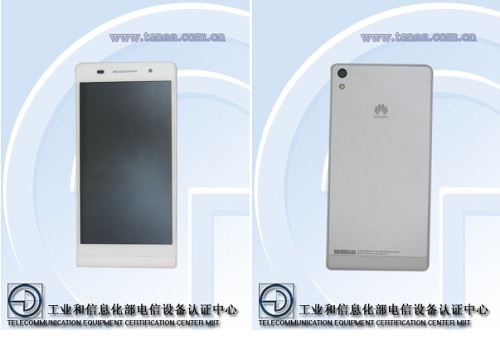
It is known that Huawei P6-U06 is equipped with a 4.7-inch touchscreen display 720p, 5-megapixel camera, quad-core processor clocked at 1.5 GHz (probably, Huawei K3V2), 2 GB RAM and 32 GB of internal memory. The device supports just two SIM-cards and running the operating system Android 4.1.2 Jelly Bean. While nothing is known about the release dates and price models.

Monday, April 29, 2013
Huawei P6-U06 Spotted In China, World’s Thinnest Smartphone With Just 6.18mm Thickness

It has been awhile since rumors stated that Huawei is preparing for the world’s thinnest smartphone. The Huawei Ascend P2 was launched earlier and it isn’t the world’s thinnest smartphone. The real world’s thinnest smartphone is this device – Huawei P6-U06.
The Huawei P6-U06 has been approved by Telecommunication Equipment Certification Center MIIT in China. The device has the measurement of 132.6×65.5×6.18mm and weighted at 120g only. This makes Huawei P6-U06 an ultra thin and super lightweight device. With the 6.18m thickness, this Huawei P6-U06 is indeed the world’s thinnest smartphone as it will overtake the Alcatel One Touch Idol Ultra soon. The Alcatel One Touch Idol Ultra has 6.45-6.5mm thickness.
Huawei P6-U06 comes with a 4.7-inch display with 1280 x 720p resolution. The processor of Huawei P6-U06 is a quad-core processor that clocked up to 1.5GHz. It could be the Hisilicon K3V2 processor and not the upcoming K3V2. This is because the K3V3 is said to be an octa-core processor (two sets of quad-core) and it is unlikely for Huawei to insert such a powerful K3V3 processor in a 720p device.
The RAM memory of Huawei P6-U06 is 2GB. It has two cameras where the main camera is an 8-megapixels shooter and the secondary camera is a 2-megapixels shooter. Huawei P6-U0 supports GSM and WCDMA network and no sign of LTE-enabled.
Other specs and features of Huawei P6-U0 include voice recording, alarm, calender, 3.5mm audio jack, GPRS, Micro USB port, Micro SD slot, GPS and etc. Huawei P6-U0 runs on Android 4.1.2 Jelly Bean. The colors available for Huawei P6-U0 are black, white and pink.
From the specs, the Huawei P6-U0 could be the Huawei Honor 3 that was leaked before. But it could be another device as well. This mystery will be solved in coming weeks.
Please like our Facebook page or follow us on Twitter or add us to your circle in Google + so that you won’t miss out any breaking news and freebies contests from us. You also can download our Android apps to receive the latest news to your mobile device.
Friday, April 26, 2013
Huawei Launches its BOOST Initiative, Furthering the Development of the Digital Society
Huawei, a leading global information and communications technology (ICT) solutions provider with more than 20 years of experience has officially launched an ultra-broadband-oriented business solution, BOOST at its Global Analyst Summit. The BOOST solution is intended to further the development of the digital society by helping telecommunications operators to achieve better business results and achieve more sustainable growth.
In the last five years, global fixed broadband (FBB) has been rapidly developing; the world has entered the ultra-broadband era. With the continued success of cloud computing and the increased popularity of HDTV and UHDTVs, 100M-to-the-home will soon become a basic amenity available to more and more homes.
The developments have also brought some challenges, and the FBB industry still requires review in order to operate successfully and achieve sustainable commercial development. The following four points are key considerations:
1. How do we present and deliver the ultra broadband offerings in a way that consumers can appreciate its full benefits?
2. How do we manage the complicated relationship between FBB and internet content providers?
3. Is FBB being substituted by mobile broadband (MBB) or can they work together?
4. How do we address the challenging business case of FTTH networks?
To address these challenges, Huawei has launched the Business Opportunity Oriented Solution and Tactics (BOOST), which includes four key elements: Broadband Salami, Engagement, Synergy, and On-demand.
Broadband Salami means filling the broadband network with appealing content and promoting the offering in a way that consumers can appreciate the value of ultra-broadband. Huawei suggests that operators define and promote ultra-broadband products based on consumer benefits such as number of concurrent HDTV channels, in addition to engineering numbers referring to the connecting speed. Huawei also suggests that connectivity speeds should match the mainstream bandwidth consumption levels of typical market segments and upgrade as the consumption levels grow, bringing new APRU growth opportunities. Simply promoting the 100M technology to consumers isn’t enough.
Engagement means proactive engagement with the broadband and content ecosystem to achieve business goals with a win-win approach.
Huawei believes that operators and Internet content providers must cooperate to offer consumers high-quality services that provide a compelling user experience. The model of partnership between Internet content providers and broadband operators will migrate from Over The Top (OTT) to Via The Telco (VTT). For example, Huawei advises that operators are not only a channel for cost-effective and quality-managed internet traffic distribution, but also a convenient sales channel for internet content providers.
Synergy means exploring the benefit of unified services including both FBB and MBB. The rapid penetration of smart devices has been driving the take-up of both MBB and FBB, as consumers tend to switch to FBB at home or work which is more cost-effective for bandwidth hungry applications. By offering unified service bundles, operators can reduce churn rate and optimize user experiences with consolidated bill and creative multi-screen innovations. This applies to both residential and enterprise customers. Synergy also exists in the underlying transport as FBB and MBB can share the same infrastructure.
On-demand means optimizing the RoI of ultra-broadband networks with the flexibility of a “fiber-to-the-most-economical-point” approach, provided the Telco can provide the bandwidth demanded by consumers. This means on-demand home-pass, on-demand home-wiring, and on-demand bandwidth. Huawei offers the HetAN (Heterogenous Access Network) solution that is compatible with copper, coaxial, and fiber. This changes ultra-broadband network construction from “FTTH only” to “Fiber On-demand”, thereby improving the ROI of ultra-broadband network construction.
Mr. Zha Jun, President of Huawei’s Fixed Network Business Unit, said, "we believe that Huawei’s BOOST business solution can effectively help global telecommunications operators convert their ultra-broadband challenges into opportunities and achieve business success. In addition, BOOST will comprehensively promote the development of ultra-broadband and further increase its social and economic value."
By the end of 2012, Huawei's fixed network products and solutions were being used by 45 of the top 50 global operators. According to a recent report by Infonetics Research, Huawei holds the largest share in global transport and access markets and the second largest share in the global IP market, and has maintained its leading position in the global development of FBB.
Huawei Launches the Industry's First 1T Router Line Card and 100T Cluster Router
Huawei, a leading global information and communications technology (ICT) solution provider, launched the industry's first 1T router line card and 100T cluster router at the Huawei Global Analyst Conference 2013. The cluster meets carriers' requirements for bearer networks in the ultra-broadband era and further consolidates Huawei's leadership position in the high-end router field.
With the rapid adoption of intelligent terminals and evolution of network business models, mobile broadband, high definition (HD) videos, and cloud services pose challenges to carrier's backbone networks. Carriers urgently need to improve the bearing capability of backbone networks to facilitate the development of ultra-wideband services.
Huawei launched the 1T router line card; the capacity of the chassis reaches 32Tbps. The 1T router line card can support high density 100GE, 40GE. At the same time, Huawei also launched the industry’s first 100T cluster router system. The cluster system is established based on the NE5000E system. By using the new-generation cluster central chassis (CCC), the cluster system can function in multiple modes to help carriers select proper cluster modes based on their requirements. Huawei's "2+ 8 cluster" currently provides more than 100 Tbit/s system throughputs.
Gai Gang, President of Huawei's Carrier IP Product Line expressed, "Huawei's 1T router line card and 100T cluster can meet the requirements for ultra-broadband service deployment and accelerate the industrialization of the high-end route technology. We hope to help carriers build sustainable and efficient networks, overcome the bandwidth challenges brought by cloud applications, and continue to reduce network construction and operation costs."
As a leader in the global IP technology, Huawei has provided carrier IP products and solutions for 45 of the top 50 carriers. According to Infonetics, Huawei ranked top 2 in the global IP market in Q4 of 2012.
Huawei announced the industry's first WebRTC based rich communications capability exposure gateway
Huawei, a leading global information and communication technology (ICT) solution provider, announced the industry's first WebRTC based rich communications capability exposure gateway at the IMS World Forum. The unique RCS service enablement function of this gateway bridges the web world with the telecom world and is expected to bring new opportunities to the telecom operators for the next generation of Web communications. To illustrate this, Huawei demonstrates a typical scenario called "car insurance" to show how this WebRTC based rich communications capability exposure gateway can be used in vertical industries and create significant value. This demo fully integrates the WebRTC technology with the RCS capabilities such as IM, File transfer, location, Video sharing etc. and shows how it significantly improves the accident processing efficiency for the insurance company, bringing at the same time a better service experience to the end users (car drivers).
WebRTC enables the browsers to support communications capability such as coding and encoding by embedding the voice and video engines into the browser itself while moving up the real time communications service control logic to a cloud server. This technology was initiated by the internet service provider to provide a web-centric "one-stop" service including real time communications. WebRTC brings new challenges to the carriers as it enables the OTT players to easily and widely spread communications services, impacting carriers’ legacy business. But it also brings opportunities as WebRTC enables carriers to extend their subscriber base on the web thanks to the communications capabilities exposure: Any web terminal becomes instantaneously a potential new subscriber of the Telco services.
As a differentiation from the industry practice , Huawei WebRTC gateway neither only focuses on the interworking between the WebRTC users and the legacy telecom users, nor is it limited to the basic voice and video capabilities exposure to the web domain. Huawei introduces the core concept of its CaaS (Communication as a Service) solution and positions its WebRTC gateway on the following 3 success factors: Richness(more service exposure far beyond plain voice and video), Compatibility(full ICT interoperability support), Simplicity(easy Java scripted based interface with high service abstraction and telecom complexity hiding for developers). As the industry's first WebRTC based rich communication capability exposure gateway, Huawei WebRTC gateway is part of its overall CaaS solution.
As one of the first Members of both IETF RTCWeb WG and W3C, Huawei has started its research on WebRTC as early as in 2011. Mr. Luosong, CTO of Huawei Core Network product line, says:" The WebRTC gateway that we’re announcing this time is a successful application of Huawei’s experience in real-time communications. As the industry’s first WebRTC based rich communications capability exposure gateway, it opens the RCS capabilities to 3rd parties via the web. The easy-to-use JavaScript based high service abstraction and encapsulation interface enables any developer without any telecommunication background to develop real-time communications enabled applications quickly, thus shortening the Time-To-Market greatly."
So far, a significant part of the world's leading telecom operators has already shown interest for the Huawei WebRTC solution and are willing to start further cooperation.
About Huawei
Huawei is a leading global ICT solutions provider. Through our dedication to customer-centric innovation and strong partnerships, we have established end-to-end capabilities and strengths across the carrier networks, enterprise, consumer, and cloud computing fields. We are committed to creating maximum value for telecom carriers, enterprises and consumers by providing competitive ICT solutions and services. Our products and solutions have been deployed in over 140 countries, serving more than one third of the world's population
Saturday, February 2, 2013
Huawei Became Certified for Microsoft SQL Server 2012 Fast Track Data Warehouse Program
Huawei, a leading global information and communications technology (ICT) solutions provider, announces it has been certified for Microsoft SQL Server 2012 Fast Track Data Warehouse program. In addition, Huawei RH2288 V2 is one of the industry's first SSD accelerator-based servers to be certified for the program.
Huawei has been working closely with Microsoft to develop joint enterprise solutions. Huawei is providing customers highly reliable, scalable reference architectures optimized and validated for SQL Server 2012. In the reference architecture, Huawei combines the high performance SSD Accelerator ES3000 with the Tecal server RH2288 V2, which is designed to use the Intel ® Xeon ® E5-2643 3.3GHz processor, specifically reconfigured and optimized for SQL Server 2012 to provide customers with data warehouse solutions from 5TB to 20TB. By using SSD memory cards instead of hard drives, Huawei has increased data warehouse query speed up to 10 times quicker, while energy consumption could be 90% lower. At the same time, the SSD memory card will simplify the management of database fragmentation and accelerate the speed of data import, thereby reducing system TCO.
Huawei and Microsoft are committed to providing cost-effective solutions to our customers; this collaboration offers a better choice to data warehouse customers, with rapid deployment, which in turn can increase business opportunities for enterprises. At the same time, initial investment and time for the data warehouse software and hardware debugging, testing and optimization could be greatly reduced.
“During challenging economic times, it is increasingly important for enterprises to rely on intelligent data to make accurate and rapid decisions. Huawei’s entry in the SQL Server 2012 Fast Track Data Warehouse Program gives customers a proven architecture to maintain and utilize their data,” said Claude Lorenson, Director of SQL Server Marketing, Microsoft. “Huawei’s enhanced hardware features, such as the SSD Accelerator ES3000, which dramatically speeds up query performance and lowers energy consumption, help deliver competitive solutions to customers.”
When talking about this partnership, Huawei IT Product Line Server General Manager Qiu Long said: "The solution and collaboration between Huawei and Microsoft on the SQL Server 2012 Fast Track Data Warehouse demonstrates a good start to the relationship for both companies in the field of enterprise IT. Customers can expect more follow-up solutions from the cooperation between Huawei and Microsoft, especially in areas of Business Intelligence, online transaction databases, virtualization, and management software to allow corporate customers to truly enjoy the benefits of agile IT".
For more information, please visit: http://www.microsoft.com/en-us/sqlserver/solutions-technologies/data-warehousing/reference-architecture.aspx
Thursday, January 17, 2013
In Prague we took a picture Huawei Ascend G510, the successor to the G500
At the event, the Chinese manufacturer Huawei in Prague, we were able to take pictures of the new model G510, which had not been formally introduced. Will he build on the success of models G300 and G600, which you have gained us many loyal fans due to its unbeatable price / performance ratio? To do it, certainly well primed.
Compared to the previous model G500 G510 offers a slightly higher CPU clock (G500 uses a processor running at 1 GHz). A slightly increased as display size from 4.3 to 4.5 inches. At the same time, however, decreased resolution. While the G500 has a display resolution 540 x 960 pixels (~ 256 ppi density) and the G510 resolution dropped to 480 x 854 pixels (218.3 ppi density). Much more, however, hurts drop size from 1 GB of RAM in G500 to 512 MB GB with G510. Another difference between the two models is that, unlike the G500 G510 supports dual SIM.
Comparison of models G500, G510 and G600
| Model | G500 | G510 | G600 |
|---|---|---|---|
| Construction | 130 × 65 × 11 mm, 156 g | 134 × 64.7 × 9.9 mm, 150 g | 134 × 67.5 × 10.5 mm, 110 g |
| Display | IPS TFT, 4.3 "(960 × 540 px) | IPS TFT, 4.5 "(854 x 480 px) | IPS TFT, 4.5 "(960 × 540 px) |
| Operating System | Android 4.0 | Android 4.1 | Android 4.0 |
| Chipset | Mediatek MT6577, CPU: 2 x 1 MHz, GPU: PowerVR SGX531 | Mediatek MT6577, CPU: 2 × 1.2 MHz, GPU: PowerVR SGX531 | Play S4 Qualcomm MSM8225, CPU: 2 × 1,2 GHz GPU: Adreno 203 |
| Memory | RAM: 1 GB, internal memory: 4 GB memory card: microSDHC | RAM: 512 MB, Internal Memory: 4 GB memory card: microSDHC | RAM: 768 MB, Internal Memory: 4 GB memory card: microSDHC |
| Camera | 5 megapixel (2592 × 1940) LED, autofocus, video: 1280 x 720 px, 30 FPS | 5 megapixel (2592 × 1940) LED, autofocus, video: 1280 x 720 px, 30 FPS | 8 megapixel (3264 × 2488) LED, autofocus, video: 640 × 480 pixels, 30 FPS |
| Battery | 1930 mAh | 1700 mAh | 1930 mAh http://mobilenet.cz |
Subscribe to:
Posts (Atom)